AI Is Not Just an Algorithmic Revolution: 800V DC Is Rebuilding the Foundation of Data Centers
Delta's new annoucement
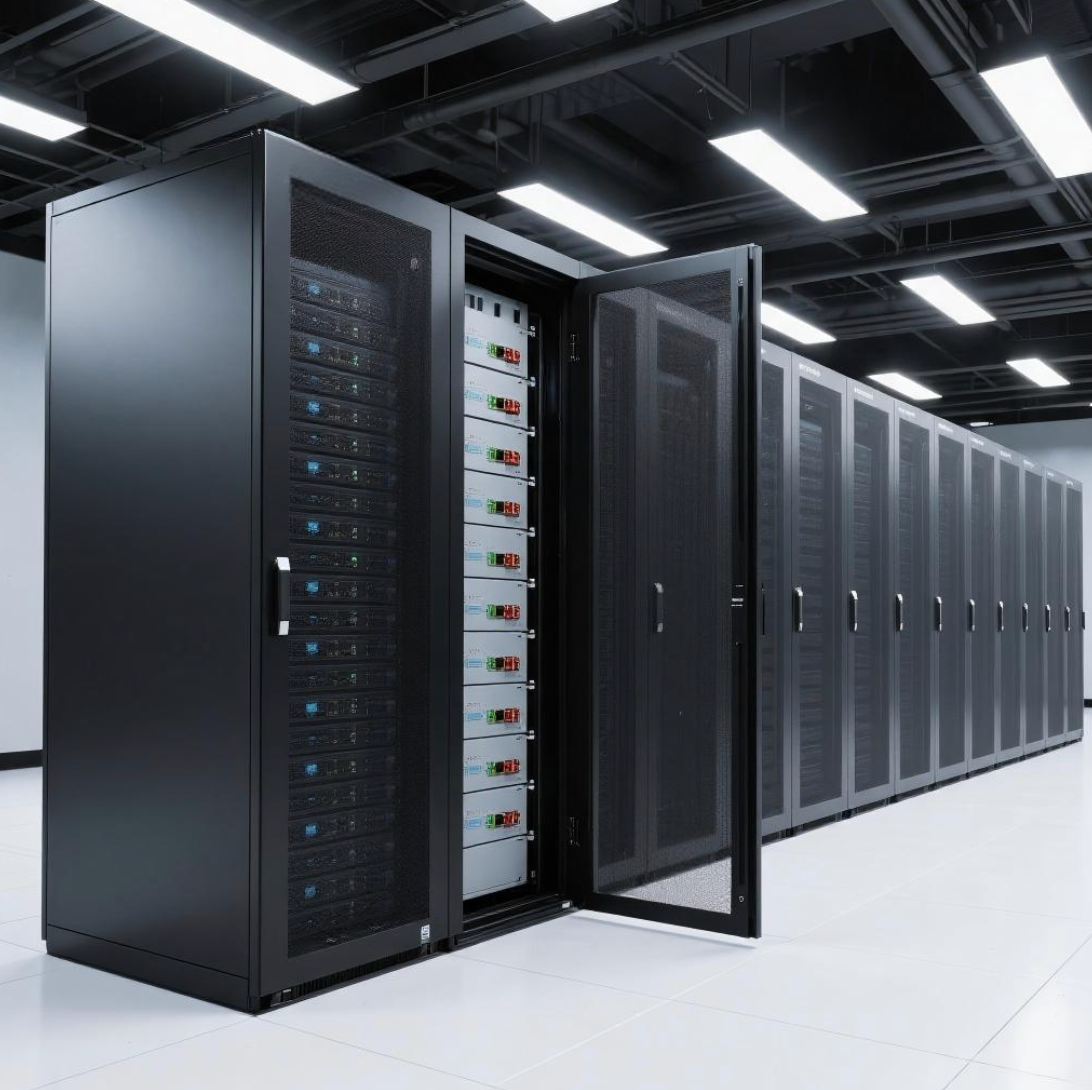
AI breakthroughs aren’t just happening in software—the real bottleneck is power. As compute density surges, power delivery is becoming the limiting factor for scaling AI.
At NVIDIA GTC, Delta Electronics introduced 800V DC power architectures, signaling a major shift from traditional 48V systems.
Why? Because at MW-level rack power, low-voltage designs mean massive currents, high losses, and impractical infrastructure.
From AC to DC: an efficiency revolution
NVIDIA’s next-gen Rubin Ultra platform is expected to push rack power to 600kW. At these levels, 48V/54V architectures demand enormous current, driving up thermal risk and copper costs.
Moving to 800V DC changes the equation:
Dramatically lower current for the same power
Cable costs significantly reduced
System efficiency pushed above 92%
But higher voltage brings higher complexity
Bringing 800V DC directly to the rack raises the bar for everything — device ratings, insulation design, system safety. SiC and GaN become essential. High-frequency switching, EMI, and grid interactions introduce tightly coupled, multi-domain challenges where a single switching transient can trigger cascading failures.
Why simulation becomes mission-critical
As AI development cycles accelerate toward “light speed,” power electronics design must compress from years to months. In this context, advanced simulation tools like DSIM become indispensable.
DSIM, leveraging innovations in its underlying algorithms—the Discrete State Event-Driven (DSED) simulation method and the introduction of Piecewise Analytical Transient (PAT) models—can simulate complex systems with tens of thousands of high-frequency switches at exceptionally high speed without sacrificing accuracy, allowing engineers to validate everything—from steady-state efficiency to transient fault behavior—before building any physical prototype. It turns complex 800V system design from a high-risk process into a controllable, iterative workflow.
The future of AI will not be defined by software alone. It will be shaped by the race between algorithmic intelligence and physical infrastructure.